The 2026 Entry Process: Your Quick-Start Guide
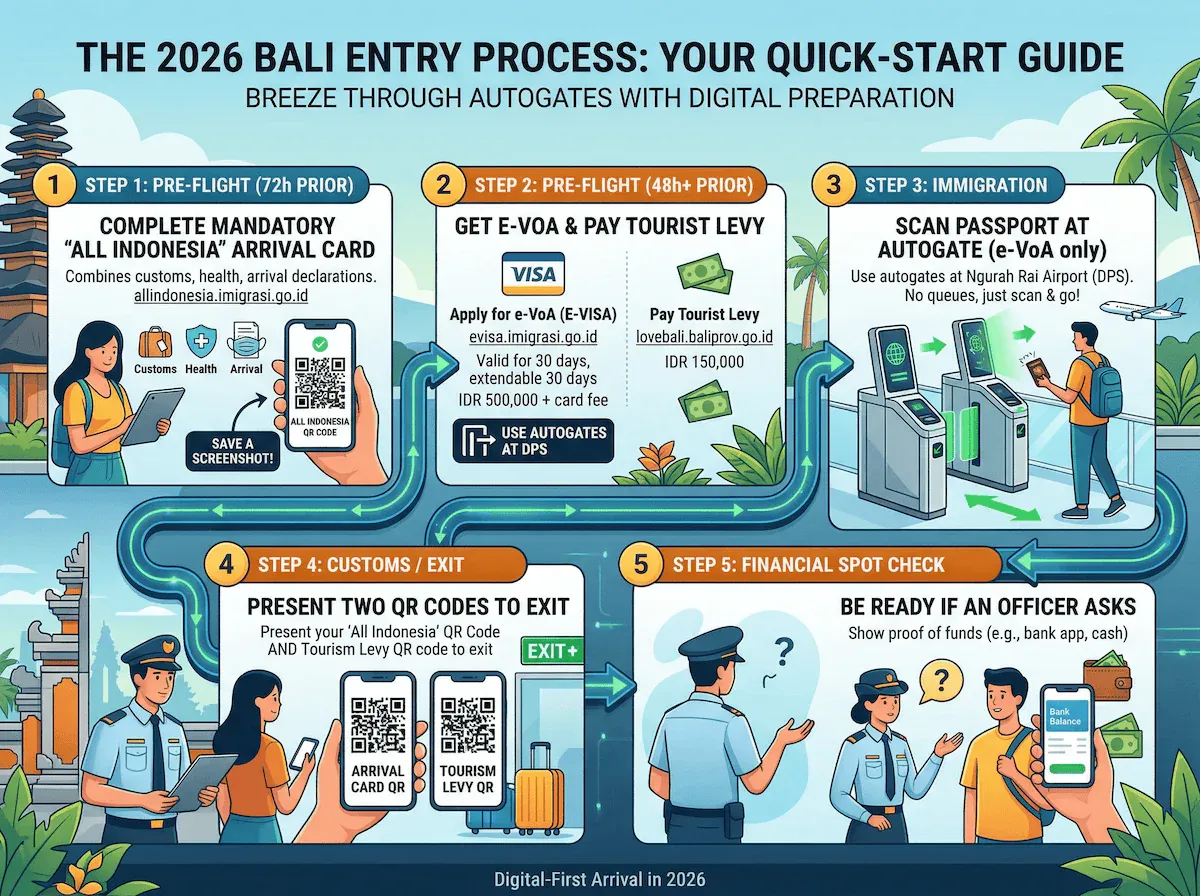
Navigating Bali’s entry requirements in 2026 is all about digital preparation. With the introduction of the new unified systems, getting your documents sorted before you fly saves you hours at Ngurah Rai Airport. Here is your essential step-by-step checklist to breeze through the autogates.
Step-by-Step Arrival
- Pre-Flight (72h prior): Complete the mandatory “All Indonesia” Arrival Card (allindonesia.imigrasi.go.id). This combines your customs, health, and arrival declarations into one QR code. Save a screenshot!
- Pre-Flight (48h+ prior):
- Apply for your e-VoA valid for 30 days extendable for another 30 days, best for speed. Cost IDR 500,000 + card fee. Use autogates at Ngurah Rai Airport (DPS), no queues, just scan & go! (evisa.imigrasi.go.id).
- Pay the Tourist Levy IDR 150,000 (lovebali.baliprov.go.id).
- Immigration: Scan your passport at the Autogate (if you have e-VoA).
- Customs/Exit: Present your “All Indonesia” QR Code and Tourism Levy QR code to exit.
- Financial Spot Check: Be ready if an officer asks for proof of funds.
Essential Documents Checklist
- Passport (Must have 6 MONTHS validity from arrival date. No exceptions!)
- Combined e-Arrival Card (QR Code from allindonesia.imigrasi.go.id)
- e-VoA (Approved & printed/digital)
- Bali Tourist Levy Voucher (QR Code)
- Proof of Onward Travel (Confirmed return ticket)
- Proof of Funds ($2,000+ USD access)
- Travel Insurance Policy
The Shift to “Quality Tourism”
As of 2026, Bali has fundamentally shifted its tourism strategy. The “Quality Tourism” paradigm is now in full effect, moving away from volume-based metrics toward high-yield, culturally respectful tourism.
For the solo traveler, this means the days of “winging it” are over. Immigration officials are enforcing stricter checks, and preparation is your best defense against entry denial.
1. The “Quality Tourism” Gate: Financial Screening & Bans
The most significant change for 2026 is the rigorous enforcement of financial screening. Immigration officers are now conducting spot-checks to ensure travelers have sufficient funds to support their stay.
[!IMPORTANT] Why is this happening? The reason for this strict financial screening mechanism is that many tourists have refused to pay—or even demanded refunds after stays—and intentionally avoided paying for food by fabricating complaints. Local businesses are currently gathering a database of tourists who will be banned from staying or entering their establishments. This government-led initiative aims to weed out “begpackers” and exploitative travelers.
What You Need to Prepare
While a fixed universal threshold remains fluid in practice, the widely accepted safety net is holding at least $2,000 USD (or equivalent) in accessible funds.
- Digital Banking: Have your banking app (Wise, Revolut, etc.) ready on your phone to instantly generate a statement or show your balance.
- Travel Insurance as Proof: Possession of a comprehensive travel insurance policy is often viewed by officials as a proxy for financial responsibility. It’s not just health protection anymore; it’s a “border entry facilitator.”
2. The Mandatory Tourism Levy
The foreign tourist levy of IDR 150,000 (approx. $10 USD) is now strictly enforced. Compliance checks are no longer just at the airport but are increasingly common at major tourist attractions (like Uluwatu Temple) and departure checkpoints.
- Pay Online: Use the “Love Bali” website (lovebali.baliprov.go.id) or app before you fly.
- Keep the QR Code: You will need this QR code to exit the airport.
3. Visa Options: e-VoA vs. VOA vs. B211A
Option 1: e-VoA (Best for Speed)
For most solo travelers on a short trip (under 30 days, extendable), this is the optimal choice.
- Site: evisa.imigrasi.go.id (Apply 48h+ before flight)
- Cost: IDR 500,000 (+ card fee).
- Duration: 30 days (Extendable online for another 30 days).
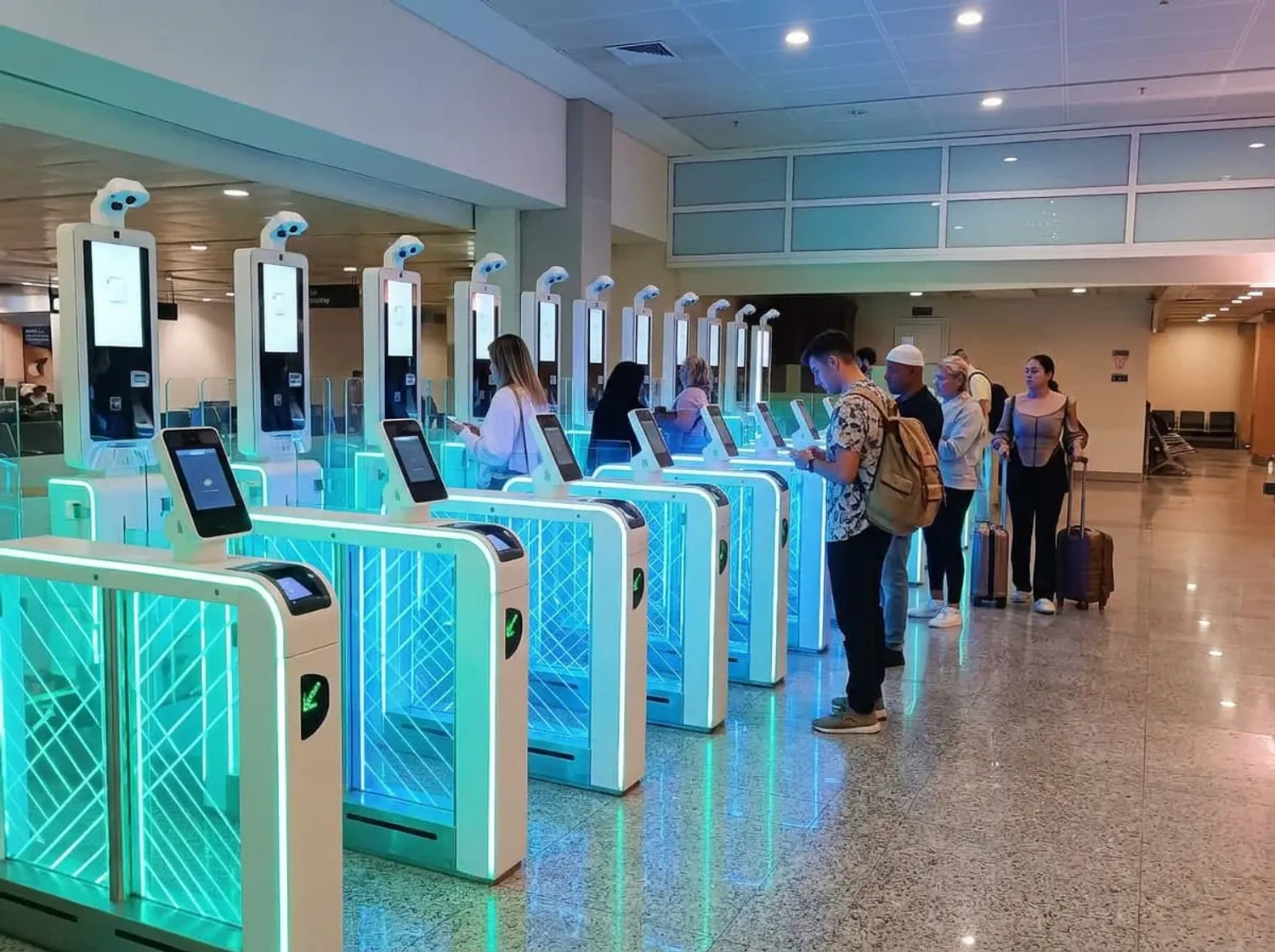
- Perk: Use the Autogates at Ngurah Rai Airport (DPS). No queues, just scan & go!
Option 2: Traditional VOA (The “I Forgot” Option)
If you didn’t apply online in advance, you can still get your visa upon arrival.
- Where: Pay at the ‘VOA Counter’ before Immigration.
- Cost: IDR 500,000 (Cash or Card).
- Duration: 30 days (Extendable at an Immigration Office).
- Note: You must wait in the manual immigration line, which can take 30-60+ minutes.
B211A (Visit Visa) & Remote Work
For “slow travelers” or digital nomads:
- Duration: 60 days + extensions (up to 180 days total).
- Remote Work Status: The E33G (Remote Worker) visa code explicitly allows foreigners to stay while working for offshore clients. This is a crucial distinction—working for local entities is strictly banned, but remote work is now legally recognized under this category.
4. The ‘Big One’ - Combined e-Arrival Card
Do not forget the absolute mandatory step for 2026. The new “All Indonesia” Arrival Card replaces the old SATUSEHAT Health Pass and Electronic Customs Declaration (e-CD).
- Visit: allindonesia.imigrasi.go.id (within 72h before your flight)
- Combines: Arrival Card, Customs Declaration, and Health Status into ONE unified QR code.
- Pro Tip: Save a screenshot of the QR code to your phone. You will need to scan it to exit the airport terminal!
By respecting these new “Quality Tourism” standards, you’re not just ensuring your own smooth entry—you’re contributing to a more sustainable and respectful future for Bali.