Introduction
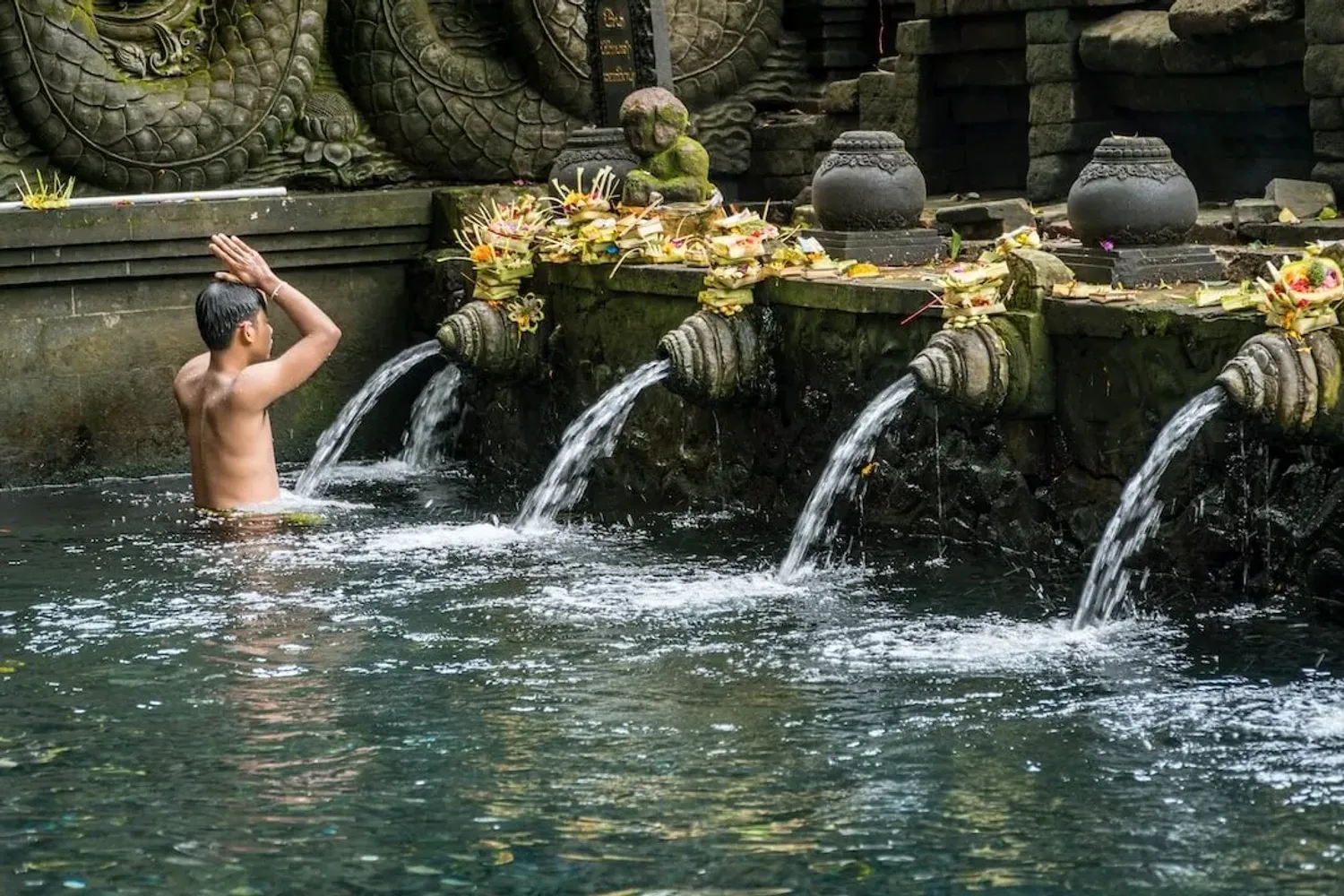
The morning mist rises over Tirta Empul Temple as devotees gather at the sacred spring pools, their hands clasped in prayer. Water flows from the thirty spouts, each believed to hold unique purifying powers. According to the Bali Tourism Board’s 2024 report, cultural tourism accounts for 35% of all visitor activities in Bali, with purification ceremonies ranking among the top three spiritual experiences sought by international travelers.
As a solo traveler, you’re uniquely positioned to immerse yourself in this profound Balinese Hindu tradition—but only if you understand the ceremony’s significance and approach it with genuine respect.
In this guide, you’ll learn:
- What the Melukat ceremony represents in Balinese Hinduism
- How to participate respectfully as a non-Hindu visitor
- The step-by-step process of the purification ritual
- Where to experience authentic Melukat ceremonies
- Essential etiquette and preparation tips
Discover authentic cultural experiences in Bali →
What is the Melukat Purification Ceremony?
The Spiritual Significance
Melukat (pronounced “meh-loo-kat”) is a sacred Balinese Hindu purification ritual that cleanses the body, mind, and spirit of negative energies, bad karma, and spiritual impurities. The word derives from the Balinese “lukat,” meaning “to clean” or “to purify.”
For Balinese Hindus, Melukat is not merely a symbolic act—it’s a deeply spiritual practice believed to:
- Remove negative influences and bad karma
- Purify the soul before important life events
- Restore balance between body, mind, and spirit
- Prepare for temple ceremonies or religious observances
- Heal spiritual illnesses caused by supernatural disturbances
Historical and Cultural Context
The practice dates back over 1,000 years to the Majapahit Empire era, when Balinese Hinduism incorporated purification rituals from Indian Vedic traditions. Today, Melukat remains one of the most accessible spiritual ceremonies for visitors to experience authentically.
Unlike many tourist-oriented cultural performances, Melukat is a living religious practice. When you participate, you’re joining local devotees who have come for genuine spiritual reasons—not for a show.
Types of Melukat Ceremonies
While the basic purification remains consistent, Melukat takes different forms:
Melukat at Water Temples (Pura Tirta)
- Most common for visitors
- Performed at sacred springs like Tirta Empul
- Uses holy water flowing from temple spouts
- Typically lasts 30-60 minutes
Melukat at the Beach (Melukat Segara)
- Performed at sunrise or sunset
- Uses ocean water believed to have purifying properties
- Often combined with offerings to sea deities
- Popular during full moon ceremonies
Melukat with Holy Water (Melukat Tirta)
- Performed by priests at family compounds
- Uses specially blessed water
- May include mantras and prayers
- More intimate, private experience
Preparing for Your Melukat Experience
What to Wear
Essential Dress Code:
- Sarong: Required for both men and women (rent at temple for $2-3)
- Sash (Udeng): Tied around the waist (often included with sarong rental)
- Modest Clothing: Shoulders and knees must be covered
- Comfortable Footwear: You’ll remove shoes before entering temple grounds
Recommended:
- Lightweight, quick-drying clothing (you’ll get wet)
- Change of dry clothes for after the ceremony
- Small towel
- Waterproof bag for electronics and valuables
What NOT to Wear:
- Shorts above the knee
- Sleeveless tops or tank tops
- Bright red or black clothing (considered inauspicious)
- Flashy jewelry or accessories
What to Bring
Essential Items:
- Small Donation: $2-5 (cash in Indonesian Rupiah)
- Offerings (Canang Sari): Can purchase at temple entrance ($1-2)
- Respectful Attitude: The most important requirement!
Helpful Items:
- Waterproof phone case or camera (if you want photos)
- Small plastic bag for wet offerings
- Hand sanitizer
- Drinking water (stay hydrated in Bali’s heat)
Timing Your Visit
Best Times for Authentic Experience:
- Early Morning (6:00-9:00 AM): Most authentic, fewer tourists
- During Full Moon (Purnama): Special ceremonies, more devotees
- During Temple Festivals (Odalan): Enhanced spiritual atmosphere
Times to Avoid:
- Mid-day (11:00 AM-2:00 PM): Hottest, most crowded
- During Nyepi (Day of Silence): Temple closed, entire island observes silence
- Major Hindu Holidays: May be restricted to practitioners only
The Melukat Ceremony: Step-by-Step
Step 1: Temple Entry and Preparation
Upon arrival at the temple, you’ll first need to:
- Purchase offerings (canang sari) from vendors at the entrance
- Rent sarong and sash if you don’t have your own
- Make a small donation at the temple entrance
- Remove shoes before stepping onto temple grounds
- Observe quietly for a few moments to absorb the atmosphere
Solo Traveler Tip: Arrive with a respectful, open mindset. The Balinese value sincerity over perfection in ritual observance.
Step 2: Making Offerings
Before purification, you’ll present your offerings:
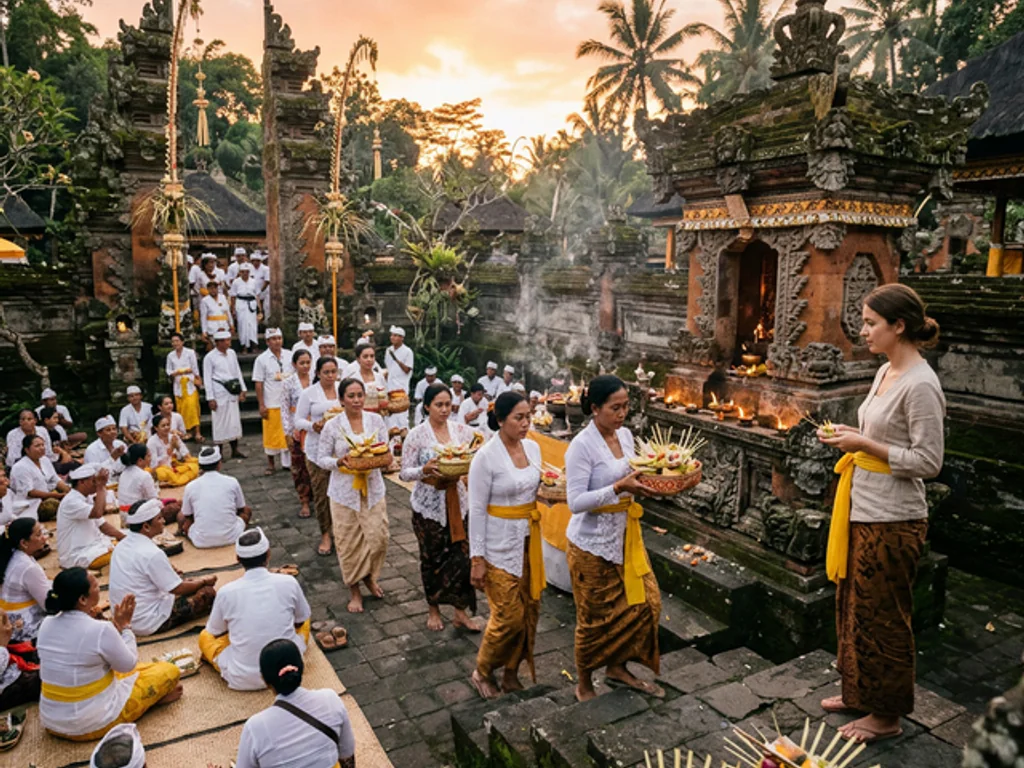
- Hold the canang sari with both hands at chest level
- Walk clockwise around the offering platform
- Place offerings at designated spots
- Join your hands in prayer position (namaste)
- Bow slightly as a sign of respect
This act symbolizes giving thanks to the gods and preparing yourself spiritually for purification.
Step 3: The Purification Ritual
This is the heart of the Melukat ceremony:
Approaching the Sacred Springs:
- Wait patiently for your turn; don’t push or rush
- Observe locals to understand the flow
- Enter the pool area with quiet reverence
The Washing Process:
- Start with the first spout (typically the easternmost)
- Scoop water with both hands
- Wash your face three times
- Rinse your mouth and spit the water away from the pool
- Wash your hair if desired
- Move clockwise to the next spout
- Repeat for all 30 spouts (or as many as you feel called to do)
Important Notes:
- Don’t drink the water—it’s for external purification only
- Move respectfully—this is a sacred space, not a water park
- Follow the flow—don’t skip ahead or disrupt others
- Stay calm and focused—this is a meditative, spiritual act
Step 4: Final Prayers and Gratitude
After completing the purification:
- Exit the pool area carefully (wet surfaces can be slippery)
- Find a quiet spot to sit and compose yourself
- Join your hands in prayer
- Express gratitude for the experience
- Reflect silently on your intentions and feelings
Many solo travelers report feeling a profound sense of peace, lightness, or emotional release after the ceremony. Take time to sit with these feelings.
Step 5: Departure and Integration
Before leaving the temple:
- Change into dry clothes (facilities usually available)
- Make a final offering if desired
- Thank temple staff or priests if you interacted with them
- Exit respectfully, maintaining the quiet atmosphere
Solo Traveler Integration Tip: Journal about your experience afterward. The Melukat ceremony often brings insights or emotions that deepen with reflection.
Where to Experience Melukat in Bali
Tirta Empul Temple (Pura Tirta Empul)
Location: Tampaksiring, Gianyar Regency (30 minutes north of Ubud)
Why It’s Special:
- Bali’s most famous water temple
- Thirty sacred spouts, each with unique purifying properties
- Historical significance: built in 926 AD
- Well-organized for visitors while maintaining authenticity
What to Expect:
- Crowded mid-day, peaceful early morning
- English-speaking guides available (for hire)
- Clear signage explaining the ritual
- Facilities: changing rooms, restrooms, small warungs
Best For: First-time Melukat experience, solo travelers seeking guidance
Pura Mengening Temple
Location: Tampaksiring, near Tirta Empul
Why It’s Special:
- Less touristy than Tirta Empul
- More intimate, local atmosphere
- Beautiful natural setting
- Authentic purification experience
What to Expect:
- Fewer international visitors
- More local devotees
- Less English signage (bring a guide or do research)
- Quieter, more meditative
Best For: Solo travelers seeking authentic, less touristy experience
Sebatu Holy Spring
Location: Sebatu Village, Gianyar Regency
Why It’s Special:
- Hidden gem in a traditional village
- Crystal-clear spring water
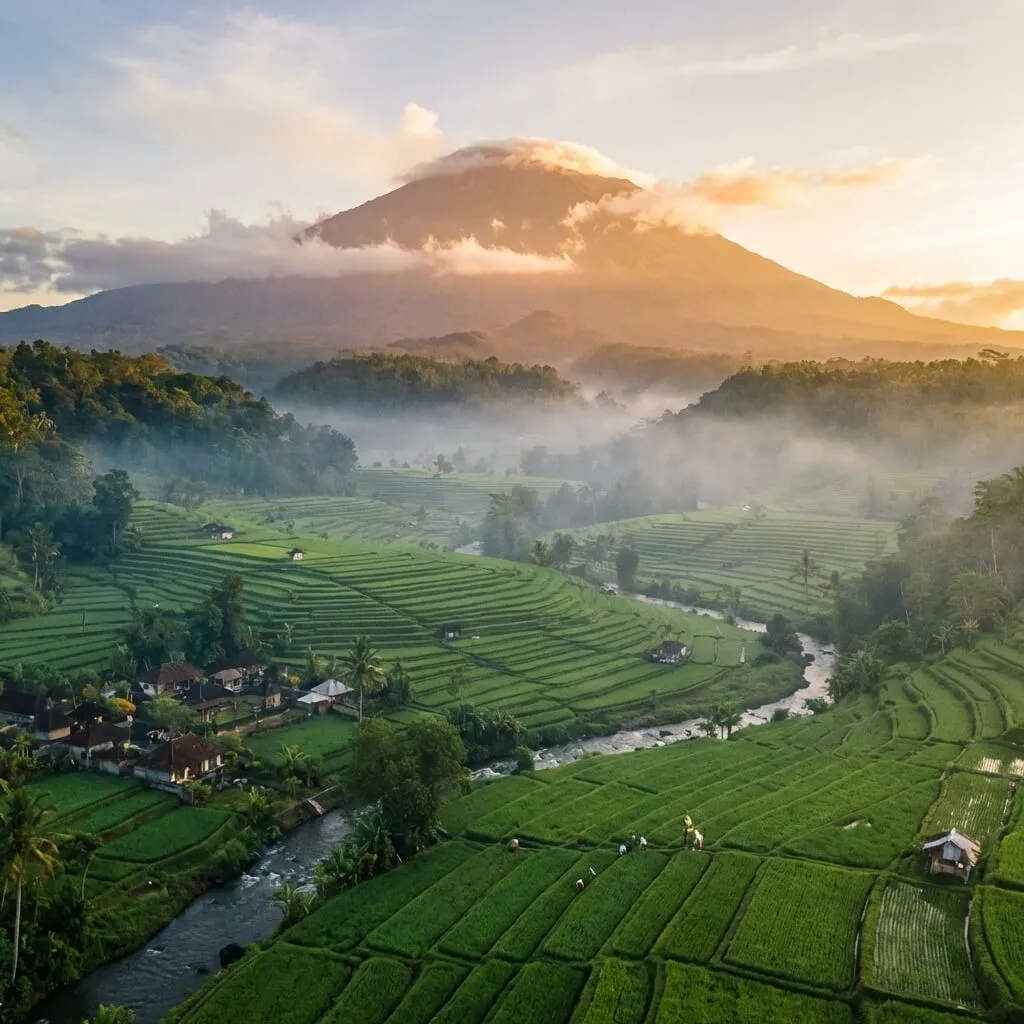
- Surrounded by rice terraces
- Community-led purification ceremonies
What to Expect:
- Very few tourists
- Warm welcome from local community
- Simple, uncommercialized experience
- May need local guide to find
Best For: Adventurous solo travelers comfortable with off-the-beaten-path experiences
Beach Melukat (Segara)
Popular Beaches:
- Kuta Beach: Sunrise ceremonies during full moon
- Sanur Beach: Quieter, family-friendly
- Lovina Beach: North Bali, dolphin watching combined with ceremony
What to Expect:
- Ocean purification instead of temple springs
- Often led by local priests
- Spectacular sunrise/sunset settings
- Less structured than temple ceremonies
Best For: Solo travelers who love the ocean and want a different Melukat experience
Etiquette and Cultural Respect
Essential Do’s and Don’ts
DO:
- Dress modestly: Sarong and sash are non-negotiable
- Move quietly: Speak in hushed tones
- Follow the flow: Don’t rush or disrupt others
- Ask permission before photographing people or ceremonies
- Observe first: Watch locals before participating
- Be patient: This is not a tourist attraction to be rushed through
- Show respect: Join hands in prayer, bow slightly to priests
DON’T:
- Enter sacred areas if restricted (look for signs or ask)
- Touch religious objects unless invited
- Drink the holy water
- Wear shoes in temple courtyards
- Use flash photography during ceremonies
- Climb on temple structures
- Disrupt prayers with loud talking or laughter
- Touch people’s heads (considered sacred in Balinese culture)
Photography Guidelines
When Photography is Appropriate:
- Temple architecture and grounds
- Your own experience (selfies, personal shots)
- Scenic views of the area
- With explicit permission from people you photograph
When to Avoid Photography:
- During active prayer ceremonies
- Close-up shots of priests or devotees without permission
- Inside inner sanctums (often restricted)
- During moments of emotional vulnerability
- When signs prohibit photography
Solo Traveler Tip: Put your phone away during the actual purification. Be present in the experience rather than documenting it. You can always take photos afterward.
Practical Information
When to Visit
Best Season:
- April-October (Dry Season): Ideal weather, fewer crowds
- June-September: Peak dry season, but also peak tourist season
- November-March (Wet Season): Fewer tourists, but rain can disrupt plans
Best Time of Day:
- 6:00-9:00 AM: Most authentic, peaceful, fewer tourists
- 4:00-6:00 PM: Afternoon light, fewer crowds than mid-day
- Avoid: 11:00 AM-2:00 PM (hottest, most crowded)
Special Occasions:
- Full Moon (Purnama): Enhanced spiritual energy, special ceremonies
- New Moon (Tilem): Particularly powerful for purification
- Galungan & Kuningan: Major Hindu festivals (check calendar)
- Nyepi: Day of Silence (temple closed, plan around this)
Where to Stay
For temple visits, stay in Ubud for easy access to water temples:
Central Ubud: Walking distance to temples, markets, and cultural sites Campuhan Ridge: Quiet area with valley views, short ride to temples Penestanan: Artistic village, 10-15 minutes to Tirta Empul
Find accommodation in Ubud:
💡 Solo Traveler Tip: Stay in a homestay to learn about Balinese culture from your hosts. Many can arrange private Melukat ceremonies or provide deeper context.
Getting There
From Ngurah Rai Airport (DPS) to Ubud:
- Private Driver: $25-35, 1.5-2 hours, most convenient for solo travelers
- Airport Taxi: Official taxi counter, fixed rates ~$30
- Ride-hailing Apps: Grab or Gojek, $20-25 (book in advance)
From Ubud to Tirta Empul:
- Private Driver: $15-20 round trip, 30 minutes each way
- Motorbike Rental: $5-7/day, 30-minute ride (experienced riders only)
- Tour: $20-30 per person, includes guide and multiple temples
Compare flight prices to Bali:
Budget Breakdown
Melukat Ceremony Costs (Solo Traveler):
| Item | Cost (USD) | Notes |
|---|---|---|
| Temple Donation | $2-5 | Cash in Rupiah |
| Sarong & Sash Rental | $2-3 | Per temple visit |
| Offerings (Canang Sari) | $1-2 | Purchase at entrance |
| Private Driver (half day) | $25-40 | From Ubud area |
| Lunch at Local Warung | $3-5 | After ceremony |
| Total Daily Budget | $33-55 | Including transport |
Money-Saving Tips:
- Rent a motorbike if comfortable riding (saves on transport)
- Bring your own sarong (purchase at Ubud Market for $5-10)
- Visit multiple temples in one day with one driver
- Eat at local warungs instead of tourist restaurants
Find budget-friendly accommodations in Ubud →
Solo Traveler Considerations
Safety Tips
Personal Safety:
- Secure your valuables: Use waterproof bags or leave at temple entrance lockers
- Stay hydrated: Bali’s heat can be intense, especially mid-day
- Wear sunscreen: Even on cloudy days
- Watch your step: Wet temple surfaces can be slippery
- Trust your instincts: If something feels uncomfortable, step back
Cultural Safety:
- Respect boundaries: Don’t enter restricted areas
- Ask questions respectfully: Locals appreciate genuine curiosity
- Avoid religious debates: This is a sacred practice, not a debate topic
- Be humble: You’re a guest in a sacred space
Emotional Preparation
The Melukat ceremony can be unexpectedly emotional for solo travelers:
Common Experiences:
- Tears or emotional release: The ritual can unlock suppressed emotions
- Feeling “lighter”: Many report physical and emotional lightness
- Spiritual insights: Thoughts or realizations during purification
- Overwhelm: Intense spiritual energy can feel overwhelming
How to Prepare:
- Set clear intentions: What do you hope to release or purify?
- Stay open-minded: Let go of expectations
- Be patient with yourself: Everyone’s experience is different
- Have integration time: Plan quiet time after the ceremony
Solo Traveler Advantage: Without companions to distract you, you can fully immerse yourself in the experience. Many solo travelers report deeper spiritual connections when alone.
Making Meaningful Connections
Even as a solo traveler, you can connect with others:
With Locals:
- Learn a few Balinese phrases: “Om Swastiastu” (greeting), “Suksma” (thank you)
- Ask respectful questions: Most locals are happy to share about their culture
- Hire a local guide: Gain deeper insights and support local economy
- Participate genuinely: Sincerity is valued over perfection
With Other Travelers:
- Share experiences: Many travelers are also seeking spiritual growth
- Join group ceremonies: Some temples offer group Melukat for visitors
- Stay in social accommodations: Hostels or homestays with common areas
Common Mistakes to Avoid
Cultural Faux Pas
Mistake 1: Treating It Like a Tourist Attraction
- Problem: Rushing through, taking selfies, being loud
- Impact: Disrespectful to devotees, disrupts sacred atmosphere
- Solution: Approach with reverence, stay quiet, observe first
Mistake 2: Inappropriate Dress
- Problem: Wearing shorts, sleeveless tops, or forgetting sarong
- Impact: Denied entry, disrespectful to temple rules
- Solution: Always wear sarong and sash, cover shoulders and knees
Mistake 3: Disrupting the Flow
- Problem: Cutting in line, rushing others, being impatient
- Impact: Frustrates locals and other visitors
- Solution: Wait patiently, follow the established flow
Practical Mistakes
Mistake 4: Not Bringing Cash
- Problem: Temple donations and offerings require cash in Rupiah
- Impact: Can’t participate or purchase offerings
- Solution: Always carry small Rupiah notes (10,000-50,000)
Mistake 5: Visiting at Peak Times
- Problem: Mid-day visits during peak season
- Impact: Crowded, hot, less authentic experience
- Solution: Visit early morning (6-9 AM) or late afternoon
Mistake 6: Not Protecting Electronics
- Problem: Getting phone/camera wet during purification
- Impact: Damaged electronics, lost photos
- Solution: Use waterproof case or leave with temple staff
What to Expect After the Ceremony
Immediate Aftereffects
Physical Sensations:
- Feeling cleansed: Many report physical lightness
- Coolness: The holy water feels refreshing
- Relaxation: Reduced stress and tension
- Energy shift: Some feel energized, others feel peaceful calm
Emotional Responses:
- Tears: Emotional release is common and normal
- Relief: Letting go of burdens or worries
- Gratitude: Deep appreciation for the experience
- Clarity: Mental clarity or new perspectives
Integration Practices
Same Day:
- Rest and reflect: Don’t rush to the next activity
- Journal your experience: Capture thoughts and feelings
- Eat mindfully: Choose nourishing food at a local warung
- Stay hydrated: The heat and ritual can be dehydrating
Following Days:
- Notice changes: Pay attention to shifts in mood or perspective
- Practice gratitude: Continue the spirit of the ceremony
- Be gentle with yourself: Integration takes time
- Share thoughtfully: If sharing, do so respectfully
Solo Traveler Integration: Without others to process with, journaling becomes especially important. Write about your intentions, the experience itself, and any insights that emerge in the days following.
Conclusion
Participating in a Melukat purification ceremony is one of Bali’s most profound experiences for solo travelers seeking spiritual connection and cultural immersion. This sacred ritual offers a unique opportunity to:
- Experience authentic Balinese Hindu spirituality
- Cleanse negative energies and set positive intentions
- Connect with local culture in a meaningful way
- Gain insights through meditative practice
Key Takeaways:
- Approach with respect and sincerity, not as a tourist attraction
- Dress appropriately: sarong and sash are mandatory
- Visit early morning (6-9 AM) for the most authentic experience
- Follow the established flow and be patient with others
- Stay present during the ritual rather than documenting it
- Allow time for integration and reflection afterward
The spiritual heart of Bali awaits those who approach with genuine respect and openness. Whether you seek emotional release, spiritual cleansing, or simply a deeper connection to Balinese culture, the Melukat ceremony offers a transformative experience.
Start planning your Bali cultural journey →
Have you experienced a Melukat ceremony or other purification rituals? Share your experience in the comments below!
Related Articles:
- Sacred Temple Ceremonies: A Solo Traveler’s Guide
- Mastering Balinese Temple Etiquette: What Solo Travelers Need to Know
- Best Yoga Retreats in Ubud for Solo Travelers
External Resources:
- Bali Tourism Board Official Website - Official information on cultural sites and events
- Indonesia Ministry of Tourism - National tourism resources
Data Sources:
- Bali Tourism Board Annual Report 2024
- Indonesia Statistics Agency (BPS) - Cultural tourism statistics